
Vegetable Shortening, Fats & Margarine Exporter in Syria
This article explores the industrial applications of vegetable shortening, fats, and margarine in Syria, with a focus on cost optimization, quality enhancement, and sourcing strategies for bakeries, confectionery manufacturers, and food producers. By understanding how these ingredients impact production processes, Syrian food manufacturers can improve product quality, increase shelf life, and reduce operational costs. Whether sourcing bulk fats for bread production, optimizing cake recipes, or enhancing the crunch and texture of biscuits, this guide provides practical insights for Syria’s evolving food industry.
Industrial Shortening for Biscuits: Improving Crunch and Shelf Life in Syrian Factories
In Syria’s competitive biscuit manufacturing industry, vegetable shortening plays a crucial role in achieving the right texture, crunchiness, and extended shelf life. Shortening is a solid fat, often derived from vegetable oils, that is used in baking to improve texture and prevent spreading.
For Syrian biscuit factories, bulk vegetable shortening is vital because it:
- Enhances the crispy texture and crunch of biscuits
- Increases product stability during transportation and storage
- Improves the moisture retention and shelf life of biscuits
- Provides cost efficiency compared to butter or margarine
By using high-quality industrial shortening Syrian manufacturers can reduce waste and ensure that biscuits retain their desired qualities over time. Choosing the right shortening blend allows producers to maintain both texture and affordability, while ensuring the consistency of batch-to-batch production.
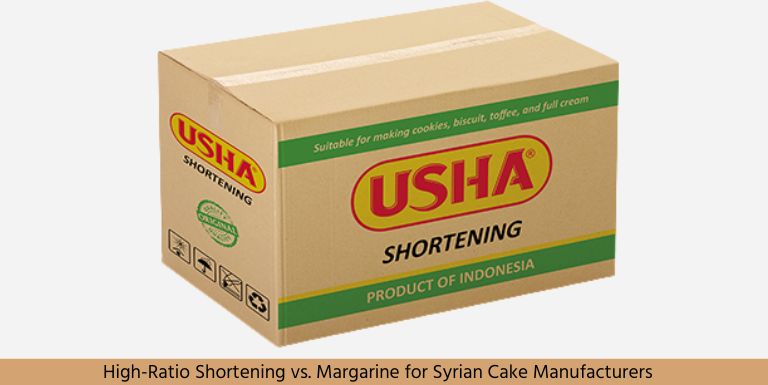
High-Ratio Shortening vs. Margarine: What Syrian Cake Manufacturers Need to Know
In cake production, especially in Syria’s mass-market baking industry, both high-ratio shortening and vegetable margarine are commonly used to create light, airy, and moist cakes. However, understanding the difference between high-ratio shortening and margarine can help cake manufacturers optimize their ingredient costs and production efficiency.
High-Ratio Shortening:
- Offers higher fat content and less water than margarine
- Improves cake volume, texture, and moistness
- Requires less emulsifier in the batter
- Helps to extend shelf life due to its ability to retain moisture
Margarine:
- Often preferred for butter-flavored cakes
- Typically has more water content, which can result in a softer batter
- Used for flavored cakes to enhance the taste profile
For Syrian cake manufacturers, high-ratio shortening provides superior baking performance, while margarine is ideal for flavored applications. By selecting the right fat, cake producers can balance costs, quality, and consumer preferences.

Bulk Bakery Fats: Sourcing Affordable Ingredients for Baladi Bread Productions
Baladi bread, a staple in Syrian households, requires affordable fats to ensure softness, elasticity, and a longer shelf life. Bulk vegetable fats are essential for cost-effective production while maintaining high-quality standards.
Key benefits of using bulk bakery fats for Baladi bread include:
- Cost efficiency: Bulk vegetable fats are more affordable than traditional fats like ghee or butter
- Consistency: Vegetable fats provide uniform texture and elasticity across large batches
- Shelf life: Fats help prevent the bread from drying out or losing texture too quickly
- Regulatory compliance: Vegetable fats, especially RBD Palm Olein, CP8, and CP10, comply with local halal certifications and other industry standards
Sourcing bulk vegetable fats from reliable suppliers helps Syrian bakeries maintain cost-effective production without sacrificing bread quality.
Vegetable Margarine Suppliers for Syria: Solutions for Croissants and Puff Pastry
For premium pastries such as croissants and puff pastry, the choice of fat is essential to achieving the desired flakiness and texture. Vegetable margarine, known for its buttery flavor and consistent texture, is commonly used in Syrian bakeries for high-end pastry production.
Why Use Margarine for Croissants and Puff Pastry?
- Consistency: Margarine provides consistent baking performance across batches
- Flakiness: The water-to-fat ratio in margarine produces a light, flaky texture
- Flavor: Offers a butter-like taste without the high cost
- Shelf life: Vegetable margarine enhances the shelf life of pastries compared to butter
Working with a trusted vegetable margarine supplier ensures that Syrian bakeries get a cost-effective, high-performance product tailored for croissants, puff pastry, and other bakery items.
Using Specialized Fats for Sandwich Biscuits in Aleppo: Optimizing Cream Fillings
Sandwich biscuits in Syria require specialized fats to ensure their creamy texture, stability, and smooth mouthfeel. Filling fats like CREAM SP19 are ideal for these applications, as they:
- Enhance texture and provide the desired viscosity for fillings
- Help to stabilize fillings at room temperature
- Improve the shelf life of filled products
- Maintain creamy consistency even under varying storage conditions
By using high-quality filling fats in sandwich biscuits, Aleppo manufacturers can ensure consumer satisfaction, reduce spoilage, and optimize production costs.
The Role of Vegetable Fats in Non-Dairy Products : Syria’s Dairy Alternatives
As Syria’s food market evolves, there is growing demand for dairy alternatives due to consumer preference for lactose-free and plant-based diets. Vegetable fats, such as RBD Palm Oil, Margarine, and specialty fats like CBS, CBR, and CBE, are crucial in producing dairy-free products like plant-based milks, vegan butter substitutes, and non-dairy creams.
Key reasons for using vegetable fats in dairy alternatives:
- Cost-effective compared to dairy products like butter or cream
- Provide creamy texture, mouthfeel, and stability in non-dairy products
- Improve shelf life and prevent spoilage in plant-based alternatives
By switching to vegetable fats, Syrian food producers can achieve high-quality non-dairy products that meet the growing demand for plant-based and vegan-friendly food options while optimizing costs.
Fry Life Extension: Best Vegetable Shortening Blends for Industrial Donut Production in Syria
In Syria’s donut production industry, frying oils and shortening play a major role in extending fry life and maintaining product quality. Vegetable shortening blends, specifically designed for high-heat frying, are crucial for achieving crispiness, golden color, and consistent texture in industrial donut production.
Shortening blends designed for frying:
- Extend fry life and reduce oil replacement frequency
- Minimize oil absorption during frying, leading to lighter donuts
- Maintain frying stability at high temperatures
Sourcing bulk shortening blends that optimize fry life helps Syrian donut producers achieve cost efficiency while maintaining product consistency.

Replacing Ghee with Vegetable Shortening: A Cost Guide for Syrian Sweets Manufacturers
In Syria, ghee is traditionally used in sweets such as baklava and ma’amoul. However, vegetable shortening is a cost-effective substitute that offers similar performance and textural properties at a lower cost.
Benefits of Replacing Ghee with Vegetable Shortening:
- Cost savings: Vegetable shortening is more affordable than ghee, especially in bulk
- Stable supply: Unlike ghee, which can fluctuate in availability, shortening offers stable pricing
- Shelf life: Vegetable shortening provides longer shelf life for sweets and reduces spoilage
By switching to vegetable shortening, Syrian sweets manufacturers can optimize production costs without compromising product quality.
Read Our Article: How to Become a Wholesale Distributor of Imported Edible Oils & Fats in Jordan?
Custom Fat Blends: Tailoring Melting Profiles for Syrian Pastry Applications
Every type of pastry requires a specific melting profile to achieve the desired texture, flakiness, and stability. Custom fat blends are formulated to meet these specific needs and are crucial in Syrian pastry applications.
For example:
- Custom margarine and shortening blends for bakery products
- Specialty fats for croissants, puff pastry, and biscuits
By working with reliable fat suppliers that offer customized blends, Syrian manufacturers can ensure:
- Improved product consistency
- Reduced wastage in production
- Better cost management
Conclusion: Long-Term Benefits of Vegetable Shortening, Fats & Margarine in Syria’s Food Industry
The industrial applications of vegetable shortening, fats, and margarine are essential to Syria’s bakery, confectionery, and food processing sectors. By carefully selecting and sourcing the right fats for their production lines, Syrian food manufacturers can achieve optimal texture, stability, and shelf life across a wide range of products, from biscuits to cakes, croissants, and filling fats for confectionery.
Working with a reliable supplier like Usha Edible Oil provides Syrian manufacturers with a comprehensive portfolio of vegetable oils, margarine, and specialty fats. Usha Edible Oil’s expertise in both manufacturing and trading ensures cost-effective sourcing, consistent quality, and stable supply chains, which are critical for Syrian producers looking to maintain long-term growth in a competitive market. Whether sourcing bulk vegetable shortening, margarine, or specialty fats like CBS, CBR, and CBE, Usha Edible Oil supports food businesses in achieving both cost optimization and high-quality product standards.
Frequently Asked Questions (FAQs)
What is the role of vegetable shortening in Syrian bakery applications?
Vegetable shortening is used to improve texture, crispness, and shelf life in baked goods like biscuits, cakes, and pastries.
Why is margarine preferred over butter in Syrian cake production?
Margarine is more cost-effective than butter and provides better baking stability and moisture retention.
Can ghee be replaced with vegetable shortening in Syrian sweets?
Yes, vegetable shortening is an affordable alternative that offers similar properties to ghee in baklava, ma’amoul, and other sweets.
How do custom fat blends help Syrian pastry manufacturers?
They are tailored to achieve specific melting profiles and texture requirements, improving product consistency.
Why are vegetable fats important for deep-frying operations in Syria?
Vegetable shortening blends help extend fry life, reduce oil absorption, and maintain frying stability at high temperatures.
How do specialized fats affect sandwich biscuit fillings in Syria?
They enhance the creamy texture, stability, and shelf life of fillings, preventing leakage and spoilage.
Author Bio

Sales Manager
Muhammad Usman, Sales Manager at Usha Edible Oil, combines years of industry experience with a strong focus on customer relationships. His expertise ensures that Usha Edible Oil delivers high-quality products, including RBD Palm Oil (CP6, CP8 and CP10), RBD Coconut Oil, Specialty Fats, Vegetable Shortening, Vegetable Ghee, and Margarine, to meet the diverse needs of global markets.
With a commitment to excellence, Muhammad continues to lead Usha Edible Oil in providing innovative and reliable vegetable oils, specialty fats, vegetable shortening, vegetable ghee, margarine export to various countries worldwide including Saudi Arabia, United Arab Emirates (UAE), Egypt, Syria, Qatar, Kuwait, Oman, Bahrain, Yemen, Iraq, Iran, Jordan, Lebanon, Palestine, Turkey, Sudan, solidifying its position as a trusted manufacturer, exporter, and wholesale supplier in the food industry.