
Syrian Importers of Vegetable Oils & Fats
This article aims to help Syrian food manufacturers, commodity traders, distributors, and bulk buyers understand how trading structures, pricing factors, and procurement strategies influence the cost of vegetable oils and specialty fats in Syria. It provides market-relevant insights into wholesale pricing, grade selection, climate impact, bulk sourcing, packaging formats, and supplier roles for products such as RBD Palm Oil, RBD Palm Olein (CP6, CP8, CP10), RBD Coconut Oil, Vegetable Ghee, Margarine, Vegetable Shortening, and specialty fats including CBS, CBR, CBE, and Filling & Spreading Fats.
RBD Palm Olein & Palm Oil Pricing in Syria: Wholesale Trends Across CP6, CP8 & CP10 Grades
RBD Palm Oil and RBD Palm Olein remain the backbone of Syria’s edible oil imports. Pricing varies significantly depending on olein grade, application, and seasonality. CP10 is widely used for household and retail distribution, CP8 is favored for industrial frying, while Super Palm Olein CP6 is increasingly preferred for premium bottling and performance-driven uses.
Wholesale pricing is influenced by:
- Global palm oil market movements
- Freight and logistics costs
- Bulk volume commitments
- Grade-specific demand
Syrian traders sourcing palm oil in bulk from reliable exporters are increasingly shifting toward contract-based wholesale pricing to reduce exposure to short-term volatility.
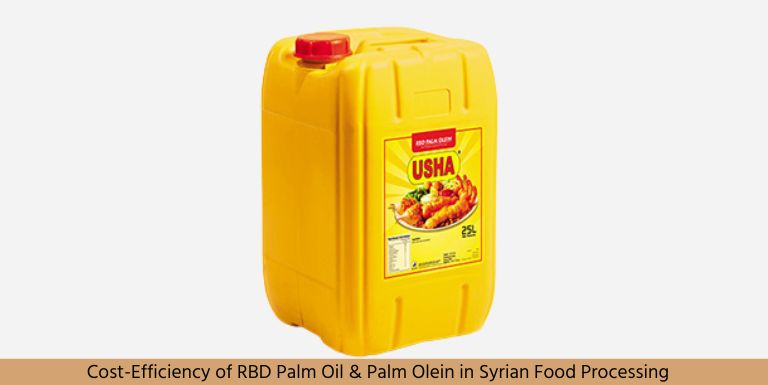
Industrial Frying & Food Processing in Syria: Why RBD Palm Oil and Palm Olein Remain Cost-Efficient
Industrial kitchens, snack manufacturers, and food processors in Syria prioritize cost efficiency and performance stability. RBD Palm Oil and Palm Olein grades offer high smoke points, extended frying life, and consistent results across large production cycles.
Key advantages include:
- Lower oil absorption
- Reduced replacement frequency
- Stable performance under high heat
For bulk users, sourcing RBD Palm Oil and Palm Olein from wholesale suppliers and exporters significantly lowers per-unit production costs compared to alternative vegetable oils.
Climate-Driven Oil Selection in Syria: Comparing Palm Oil CP8, CP10 & Super Palm Olein CP6
Syria’s seasonal climate variations play an important role in oil selection. Lower winter temperatures can affect oil clarity and flow behavior, especially for retail-packed oils.
- Palm Oil CP10 is suitable for warmer conditions and mass-market retail
- Palm Oil CP8 performs better in cooler conditions and industrial use
- Super Palm Olein CP6 offers improved cold stability and premium appearance
Importers and distributors who align grade selection with seasonal demand avoid product complaints and reduce returns.

Vegetable Ghee, Margarine & Shortening Trading in Syria: Pricing and Bakery Application Trends
Vegetable Ghee, Margarine, and Vegetable Shortening are essential fats for Syria’s bakery, pastry, and foodservice sectors. These products are valued for texture, flavor neutrality, and consistency.
Trading trends show:
- Rising bulk demand from bakeries and catering units
- Increased preference for wholesale vegetable ghee suppliers
- Stable year-round demand for margarine and shortening
Bulk sourcing from experienced traders helps bakeries maintain consistent formulations and manage costs effectively.
Bulk RBD Coconut Oil Imports in Syria: Cost Factors for Food, Soap & Confectionery Industries
RBD Coconut Oil serves multiple industries in Syria, including food processing, confectionery, and soap manufacturing. Unlike palm oil, coconut oil pricing is more sensitive to origin availability and seasonal harvests.
Cost drivers include:
- Global coconut supply cycles
- Freight costs
- Application-specific quality requirements
Syrian buyers sourcing bulk RBD Coconut Oil from exporters benefit from consolidated shipments and better price negotiation.
Commodity Packaging & Distribution in Syria: Cans, Drums & FCL Shipments for Oils and Fats
Packaging plays a direct role in landed cost and distribution efficiency. In Syria, demand is split between bulk industrial packaging and retail-ready formats.
Common formats include:
- Drums and flexitanks for industrial buyers
- Cans and tins for foodservice and retail
- Full Container Load (FCL) shipments for cost optimization
Importers selecting the right packaging format can reduce handling losses and improve supply efficiency.
Specialty Fats Trading in Syria: CBS, CBR, CBE & Filling Fats Pricing Dynamics
Specialty fats are increasingly important in Syria’s confectionery and bakery production. Products such as Cocoa Butter Substitute (CBS), Cocoa Butter Replacer (CBR), Cocoa Butter Equivalent (CBE), and Filling & Spreading Fats allow manufacturers to balance cost and performance.
Pricing depends on:
- Fat composition and functionality
- Compatibility with cocoa butter
- Volume commitments and application
Wholesale sourcing of specialty fats ensures stable pricing and consistent quality across batches.
Cost Optimization for Chocolate & Bakery Producers in Syria Using Specialty Fats
Chocolate coating and bakery manufacturers use specialty fats strategically to manage costs without sacrificing product appeal.
- CBS is used for compound coatings and cost-sensitive products
- CBR works well in blended systems
- CBE delivers cocoa butter-like performance for premium mass-market chocolates
- Filling fats improve shelf stability and reduce leakage
Choosing the correct fat for each application prevents over-engineering and unnecessary expense.

Bulk vs Spot Buying of Edible Oils & Fats in Syria: ROI, Risk & Price Stability Analysis
Spot buying exposes Syrian buyers to unpredictable pricing and supply gaps. Bulk and contract buying, on the other hand, provides greater stability.
Bulk Buying Benefits
- Lower per-unit cost
- Guaranteed availability
- Improved production planning
Spot Buying Risks
- Price spikes
- Inconsistent quality
- Supply disruptions
Most large food manufacturers now prefer long-term contracts with trusted exporters.
Read Our Article: Distributor & Partnership Opportunities in Syria with Usha Edible Oils
Supplier, Trader & Exporter Role in Syria’s Commodity Oil & Fats Pricing Structure
The pricing of commodity oils and fats in Syria is shaped by the interaction between suppliers, traders, distributors, and exporters. Each plays a role in cost formation, logistics, and quality assurance.
Working with a supplier that combines manufacturing strength and trading flexibility offers advantages such as:
- Better pricing transparency
- Faster issue resolution
- Consistent product availability
This structure is increasingly preferred by Syrian importers seeking long-term reliability.
Conclusion: Building a Sustainable Trading Strategy for Commodity Oils & Fats in Syria
The trading and pricing of commodity vegetable oils and fats in Syria depend on a combination of product selection, grade suitability, bulk sourcing, and supplier reliability. Strategic procurement of RBD Palm Oil, Palm Olein CP6/CP8/CP10, RBD Coconut Oil, Vegetable Ghee, Margarine, Vegetable Shortening, along with CBS, CBR, CBE, and Filling Fats, enables food industries to manage costs while maintaining performance and quality.
Bulk buying, appropriate packaging selection, and long-term relationships with reliable exporters and traders are essential for price stability and operational continuity. In this context, working with an experienced manufacturer-trader-exporter of RBD Palm Oil like Usha Edible Oil provides Syrian importers and distributors with access to high-quality products, wholesale pricing structures, bulk supply capabilities, and consistent export support. Such partnerships play a critical role in strengthening Syria’s edible oil and fats supply chain and supporting sustainable growth in the food sector.
Frequently Asked Questions (FAQs)
Which edible oils are most traded in Syria?
RBD Palm Oil and Palm Olein grades dominate due to cost efficiency and versatility.
Why is CP6 palm olein preferred for premium retail?
It offers better cold stability and visual clarity.
Are specialty fats widely used in Syria?
Yes, especially in chocolate, bakery, and confectionery manufacturing.
Is bulk buying more economical than spot purchases?
Yes, bulk buying provides better pricing and supply stability.
What packaging is preferred for industrial buyers?
Drums, flexitanks, and FCL shipments are commonly used.
How do suppliers influence pricing in Syria?
Supplier reliability, scale, and export capability directly affect pricing consistency.
Author Bio

Sales Manager
Muhammad Usman, Sales Manager at Usha Edible Oil, combines years of industry experience with a strong focus on customer relationships. His expertise ensures that Usha Edible Oil delivers high-quality products, including RBD Palm Oil (CP6, CP8 and CP10), RBD Coconut Oil, Specialty Fats, Vegetable Shortening, Vegetable Ghee, and Margarine, to meet the diverse needs of global markets.
With a commitment to excellence, Muhammad continues to lead Usha Edible Oil in providing innovative and reliable vegetable oils, specialty fats, vegetable shortening, vegetable ghee, margarine export to various countries worldwide including Saudi Arabia, United Arab Emirates (UAE), Egypt, Syria, Qatar, Kuwait, Oman, Bahrain, Yemen, Iraq, Iran, Jordan, Lebanon, Palestine, Turkey, Sudan, solidifying its position as a trusted manufacturer, exporter, and wholesale supplier in the food industry.